

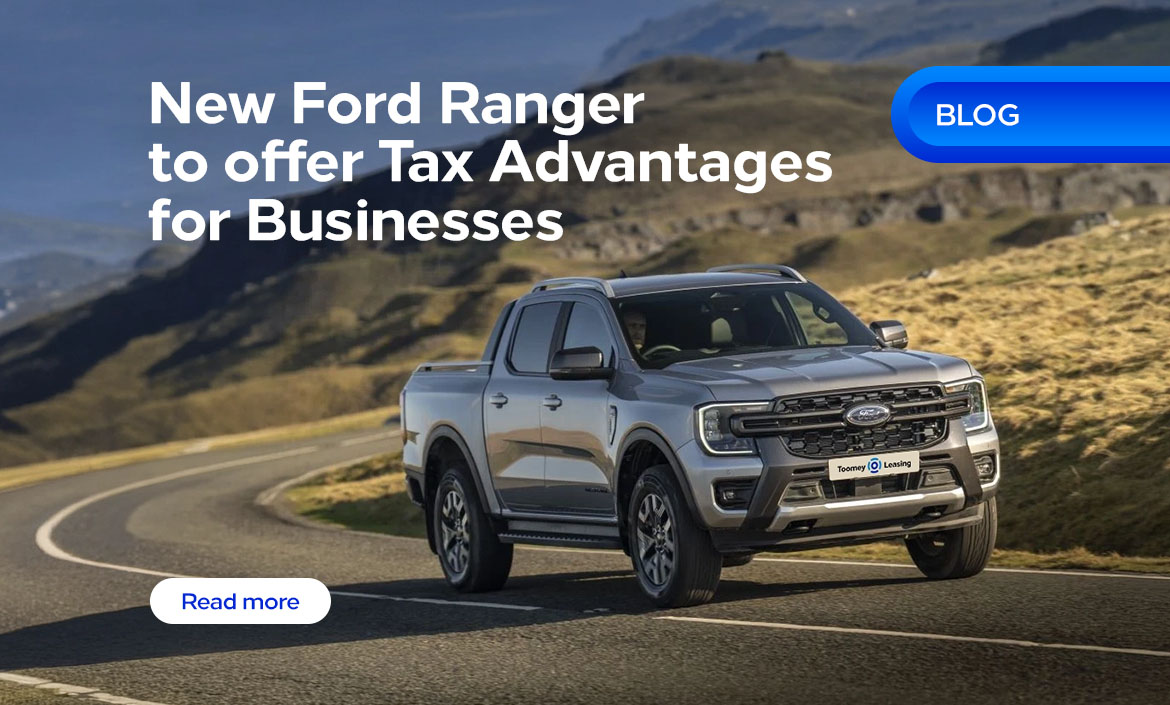
Ford are introducing a new version of the Ford Ranger that could offer significant tax advantages for businesses, particularly in light of recent changes to the tax treatment of double cab pick-up vehicles.
The new model takes the familiar double cab pick-up format and reconfigures it into a two-seater commercial vehicle, replacing the rear passenger seats with a dedicated storage area. While this may seem like a small design change, the implications for tax efficiency and fleet planning could be substantial.
With evolving legislation impacting how double cab pickups are classified, this latest development gives businesses a new way to balance capability with cost control.
Understanding the Tax Changes
In recent years, the tax treatment of double cab vehicles has come under increased scrutiny. Traditionally, double cab pick-ups that were considered suitable for the conveyance of goods or burden were treated as vans for tax purposes, rather than company cars.
This distinction is important. Vans benefit from a flat-rate benefit in kind (BIK), whereas a company car is taxed based on emissions and list price, often resulting in significantly higher costs for both employers and employees.
However, changes introduced from April 2025 have altered the way many double cab pickups are assessed. Under the new rules, vehicles that are not considered to be constructed primarily suited for the conveyance of goods may now be treated as cars for tax purposes. This shift has had a direct impact on the affordability of certain models within fleet environments.
There are transitional arrangements in place. Businesses that purchased, leased or ordered a double cab pick-up before 6th April 2025 may still benefit from the previous treatment until the earlier of lease expiry or 5th April 2029. However, beyond this point, the new rules will apply more widely, making tax planning an increasingly important consideration.
A New Approach from Ford
Ford’s response to these changes is both practical and strategic. By removing the rear seats and converting the Ranger into a two-seater, the vehicle is more clearly aligned with the definition of a commercial vehicle.
The addition of a fixed bulkhead behind the front seats, combined with a dedicated load area, reinforces its classification as a vehicle suited for the conveyance of goods. This could allow it to qualify as a van for tax purposes under current legislation, helping businesses avoid the higher company car tax charges now associated with some double cab pickups.
For many businesses, this represents a return to a more favourable tax position, without sacrificing the core strengths of the Ford Ranger.
Designed Around Real-World Use
Beyond tax considerations, the design changes also reflect how many double cab pick-up vehicles are actually used. In many cases, the rear seats are rarely occupied by passengers and instead serve as additional storage space for tools, equipment or materials.
The new two-seater configuration formalises this usage. The rear cabin has been replaced with a durable, purpose-built storage area, complete with a heavy-duty floor, anchor points and a loadspace liner. Aluminium panels replace the rear windows, further enhancing security and practicality.
This setup makes the vehicle more functional for tradespeople, engineers and other professionals who require secure internal storage alongside the open load bed.
Powertrains and Capability
At launch, the two-seater Ford Ranger will be available in the popular Wildtrak trim, a specification that blends rugged capability with modern comfort and technology.
Buyers will have the choice of traditional diesel engines as well as a plug-in hybrid option. The hybrid variant introduces added flexibility, particularly for businesses looking to reduce emissions without fully committing to an electric vehicle.
It also features Ford’s Pro Power Onboard system, allowing the vehicle to act as a mobile power source. This can be especially valuable for operators working on-site, enabling tools and equipment to be powered directly from the vehicle.
Despite the changes to its interior layout, the Ranger retains its core strengths as a double cab pick-up, including strong towing capability, durability and off-road performance.
What This Means for Fleets
For fleet operators, the introduction of this new model comes at an important time. With the tax treatment of double cab vehicles evolving, businesses need to carefully consider how their vehicle choices align with both operational requirements and financial efficiency.
The new Ranger offers a potential solution for those who still need the versatility and presence of a pickup but want to avoid the higher costs associated with company car taxation. By qualifying as a van for tax purposes, it can help reduce benefit in kind liabilities and overall running costs.
It also provides an option for businesses that may have previously relied on the previous rules but are now approaching the end of transitional arrangements. As lease expiry dates approach and the April 2029 deadline draws closer, reviewing fleet composition will become increasingly important.
A Changing Landscape for Double Cab Pickups
The broader shift in how double cab pickups are assessed reflects a wider trend within the automotive and tax landscape. As regulations evolve, manufacturers are adapting their vehicles to ensure they remain viable for business users.
Ford’s approach with the Ranger highlights how relatively small design changes can have a meaningful impact on classification and cost. By focusing on the vehicle’s primary function as a working tool, it aligns more closely with the criteria required for commercial vehicle status.
For businesses, this underlines the importance of staying informed. The difference between a vehicle being classified as a van or a company car can have a significant effect on total cost of ownership.
Looking Ahead
The two-seater Ford Ranger represents a smart and timely response to changing market conditions. It offers businesses a way to retain the capability of a double cab pick-up while potentially benefiting from more favourable tax treatment.
As the industry continues to evolve, solutions like this will play a key role in helping fleets adapt. Whether you are replacing vehicles, expanding your fleet or reviewing your current agreements, understanding how these changes affect you is essential.
At Toomey Leasing Group, we work closely with businesses to navigate developments like these, ensuring that vehicle choices remain aligned with both operational needs and financial goals.